Finger Independence Exercises: How to Fix Weak, Stuck Fingers
September 01, 20265 min read
Reviewed by the NSD Spinner team · Published September 1, 2026 · Educational, not medical advice — for pain, numbness, or lasting weakness, see a physician or hand therapist.
Finger independence exercises train each finger to move — and hold still — on its own, without the neighbours tagging along. If your fingers feel weak, stiff, or “stuck together” when you play an instrument, climb, type, or grip, the fix is rarely brute force. Independence is mostly a neural control skill, and it is very trainable. And here is the surprise most people get wrong: your pinky isn’t weak — it’s just undertrained.
What are finger independence exercises?
Finger independence exercises are drills that teach one finger to flex, lift, or stabilise while the others stay relaxed or still. They target the small muscles inside your hand and the brain’s ability to fire each finger separately — not raw crushing strength.
Think of two different jobs: control (moving one finger cleanly on command) and capacity (having the strength and endurance to do it for hours). You need both, and they are trained differently.
Why do your fingers feel weak or “stuck”?
Because two separate muscle systems run your hand, and most people only train one.
Extrinsic muscles live in your forearm (like the flexor digitorum superficialis, or FDS). They power your grip and how hard you can press. Long tendons run from the forearm into the fingers.
Intrinsic muscles live inside your hand (the lumbricals and interossei). They handle fine, independent movement — splaying fingers, moving one at a time, stabilising each knuckle.
“Stuck” fingers are usually an intrinsic control problem. A weak, tiring grip is usually an extrinsic capacity problem. Knowing which one you have tells you which exercises to do.
Is your pinky actually weak?
No. The little finger only feels weak because it is rarely trained on its own. Structurally it is built for independence: it has its own dedicated muscle group (the hypothenar muscles) and is driven largely by the ulnar nerve, separate from the median nerve that dominates your thumb and index side. It even acts as a counterbalance to the thumb across the base of the hand.
So the pinky is not the runt of the hand — it is arguably the most independent finger you own. It just needs specific, deliberate reps. Musicians feel this most: see our breakdown of the weak 4th and 5th fingers for pianists.
The best finger independence exercises
Do this short routine daily. Keep the rest of the hand relaxed — quality of separation beats speed. Start slow; stop if you feel joint pain.
Exercise
What it trains
Dose
Table finger lifts — hand flat, lift one finger at a time while others stay down
Independent extension + brain-to-finger control
2–3 rounds of all 5 fingers
Finger spreads — splay fingers wide, then together
Interossei (abduction/adduction)
10–15 slow reps
Claw / lumbrical holds — bend knuckles, keep fingertips straight, hold
Lumbricals + knuckle stability
3 holds of 10–20 sec
Thumb-to-finger taps — touch thumb to each fingertip, one at a time
Opposition + differentiation
2–3 rounds, both directions
Pinky solo lifts & presses — isolate the 4th and 5th finger
The undertrained little-finger side
10–15 controlled reps
Tendon glides — move through fist, hook, and straight positions
Smooth tendon travel + mobility
5–8 full cycles
The whole set takes 3–5 minutes. Frequency beats duration here — a few honest minutes most days works better than one long weekly session.
How do you strengthen fingers (vs. train independence)?
Independence drills build control, but they do not build much raw capacity. If your grip fades, your presses feel soft, or your forearms burn after 20 minutes, you also need to strengthen the extrinsic system — the forearm flexors and extensors that drive every finger through their tendons.
That is a different tool. Progressive grip and forearm work is what raises the ceiling, and it pays off broadly — see our full guide to grip strength training.
Where does forearm training (and the NSD Spinner) fit?
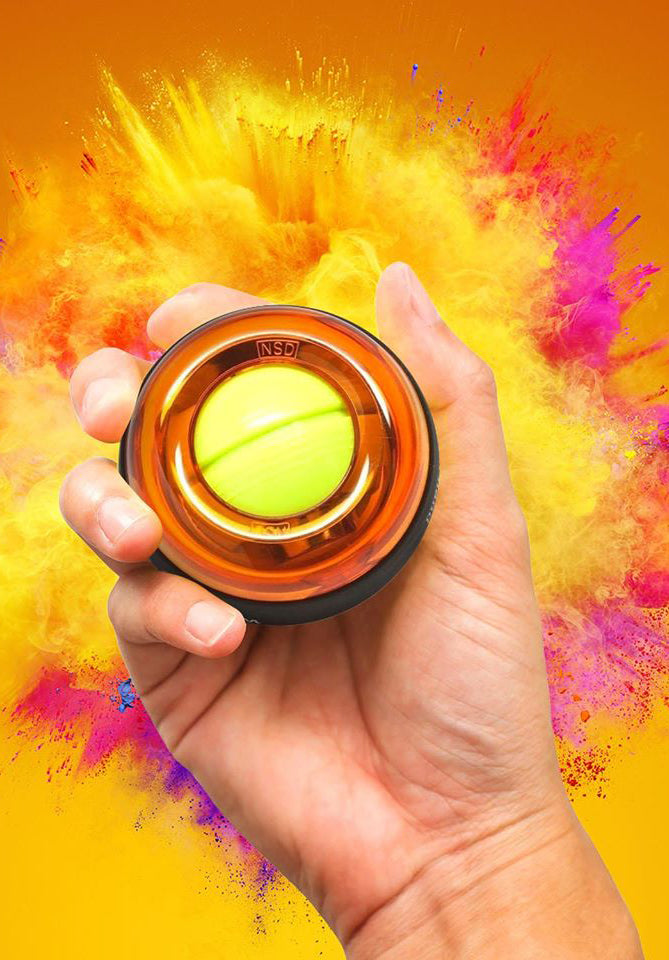
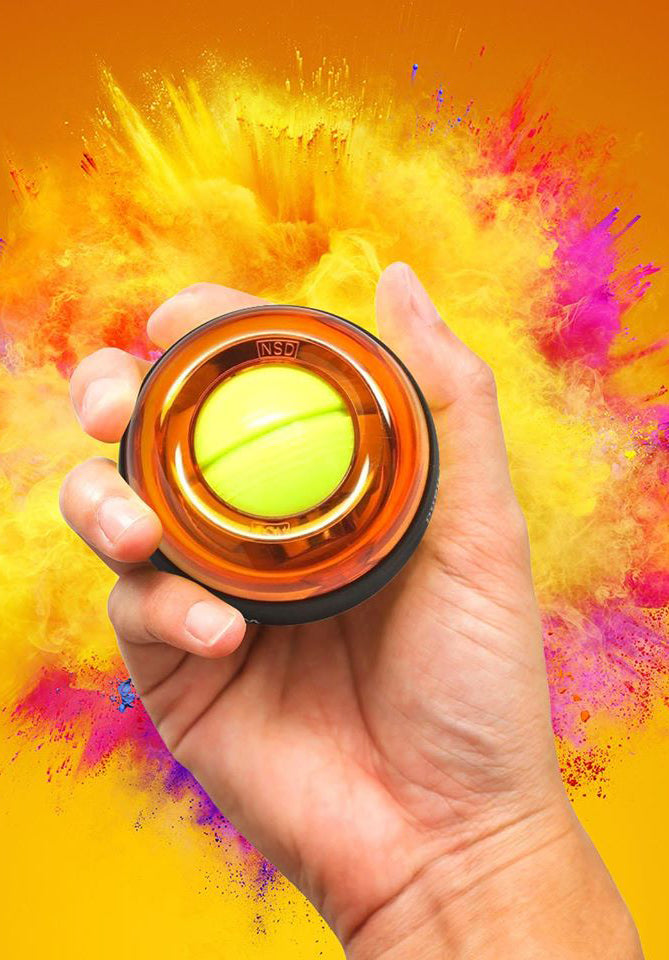
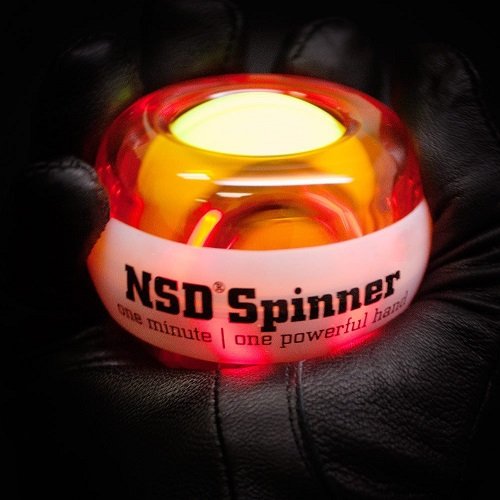
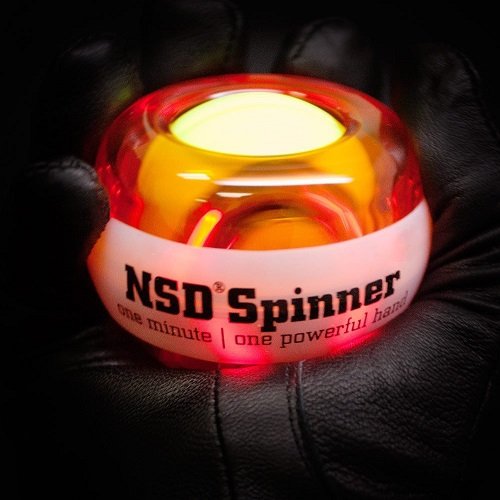
Here is the honest split, because it matters: a gyroscopic trainer like the NSD Spinner builds the foundation — forearm flexor and extensor strength, wrist stability, and grip endurance (exactly the FDS-type muscles that fatigue first). It does not isolate the tiny intrinsic muscles (lumbricals and interossei) that create finger independence.
So use them as a pair, not a substitute:
NSD Spinner → the base layer. A minute of spinning loads the forearm and grip so your hand does not fatigue mid-task. Easy to progress, low impact, do it anywhere.
Independence drills (the routine above) → the fine control layer on top.
Build the engine, then refine the steering. If you want a stronger, more enduring hand under all that fine control, start with the NSD Spinner.
How long until you see results?
Most people notice cleaner, more independent finger movement in 2–4 weeks of near-daily practice — early gains are mostly neural (your brain getting better at firing each finger). Meaningful strength and endurance gains build over 8–12 weeks of consistent forearm and grip work.
Common mistakes to avoid
Muscling through it. Independence is about clean separation, not force. Tension in the other fingers defeats the purpose.
Skipping the pinky side. The 4th and 5th fingers need dedicated reps — they will not catch up by accident.
Training control but never capacity (or the reverse). You need both the fine drills and the forearm base.
Pushing into joint pain. Mild effort is fine; sharp or lasting pain means stop and get it checked.
Finger independence FAQ
Can you really train finger independence? Yes. It is largely a neural skill, so consistent daily reps rewire the brain-to-finger control quickly — often noticeable within a few weeks.
Is the pinky the weakest finger? No. It has its own dedicated muscle group and nerve supply and is built for independence. It only feels weak because it is rarely trained in isolation.
How often should I do finger independence exercises? Most days. Short and frequent (3–5 minutes) beats long and occasional for skill-based training.
Does grip strength training improve finger independence? Indirectly. Grip and forearm work build the capacity and endurance underneath your fingers, but you still need specific independence drills for the fine control itself.
Who needs this most? Musicians, climbers, keyboard-heavy workers, and anyone rehabbing a stiff or injured hand — see our overview of hand exercises for musicians.
The bottom line
Finger independence is trainable, your pinky is stronger than you think, and the fastest progress comes from pairing fine control drills with a strong forearm foundation. Spend five minutes a day on the routine above, keep your grip and forearms progressing, and give it a few weeks.
Published by NSD Spinner · September 1, 2026.
Subscribe
Sign up to get the latest on sales, new releases and more …