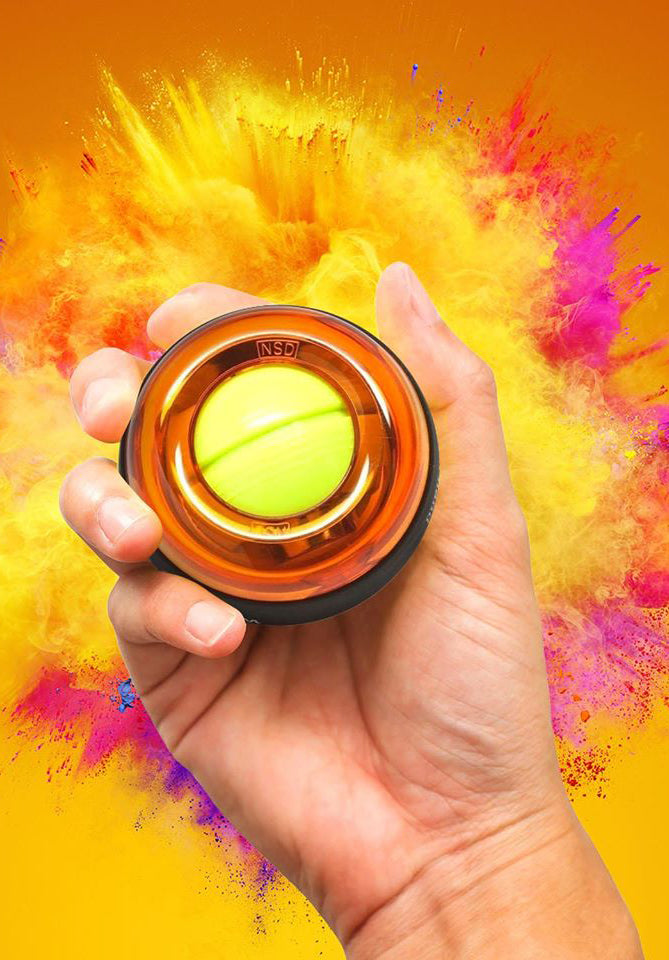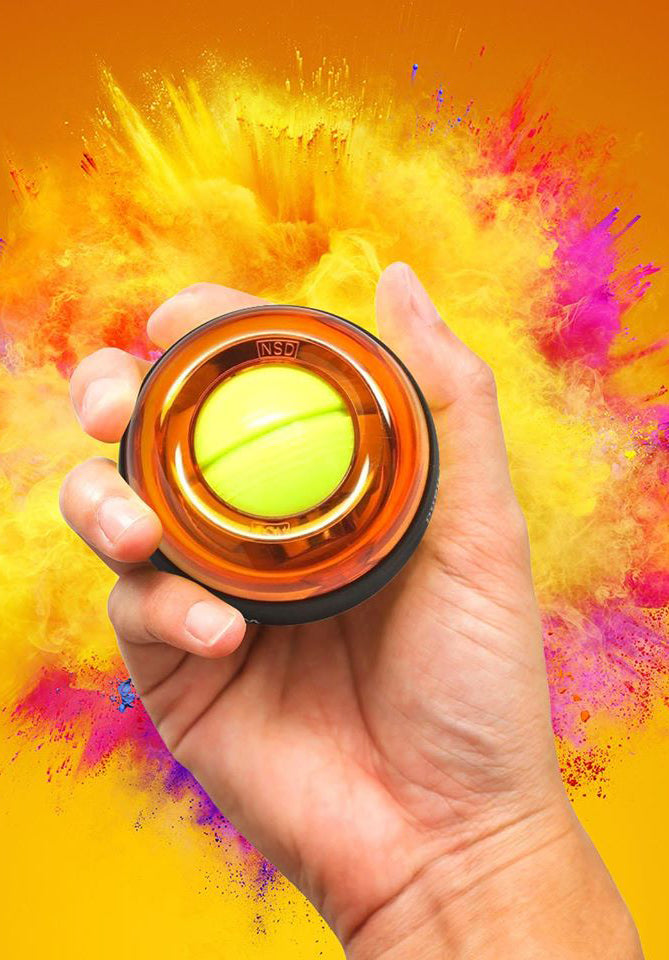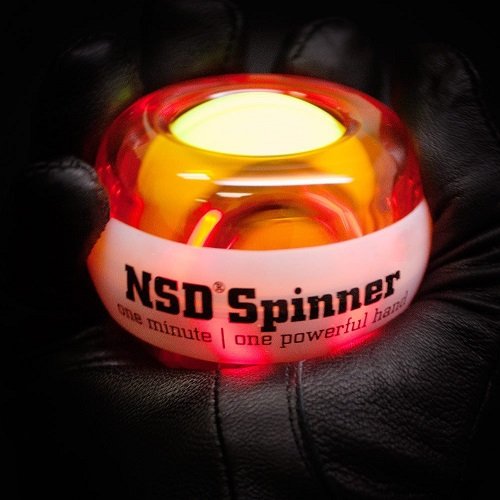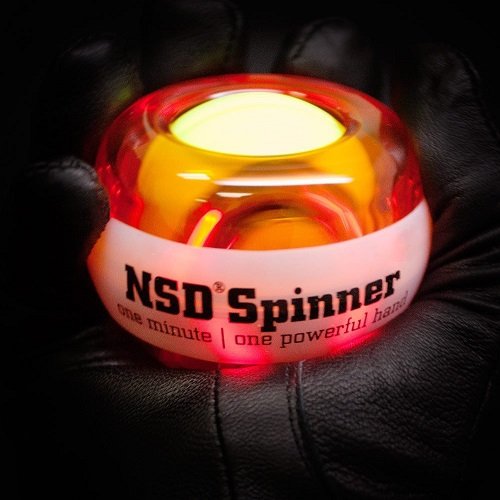
NSD Spinners are scientifically developed to help your arms get the right support they need. Get the right compliment to your arm exercises now.
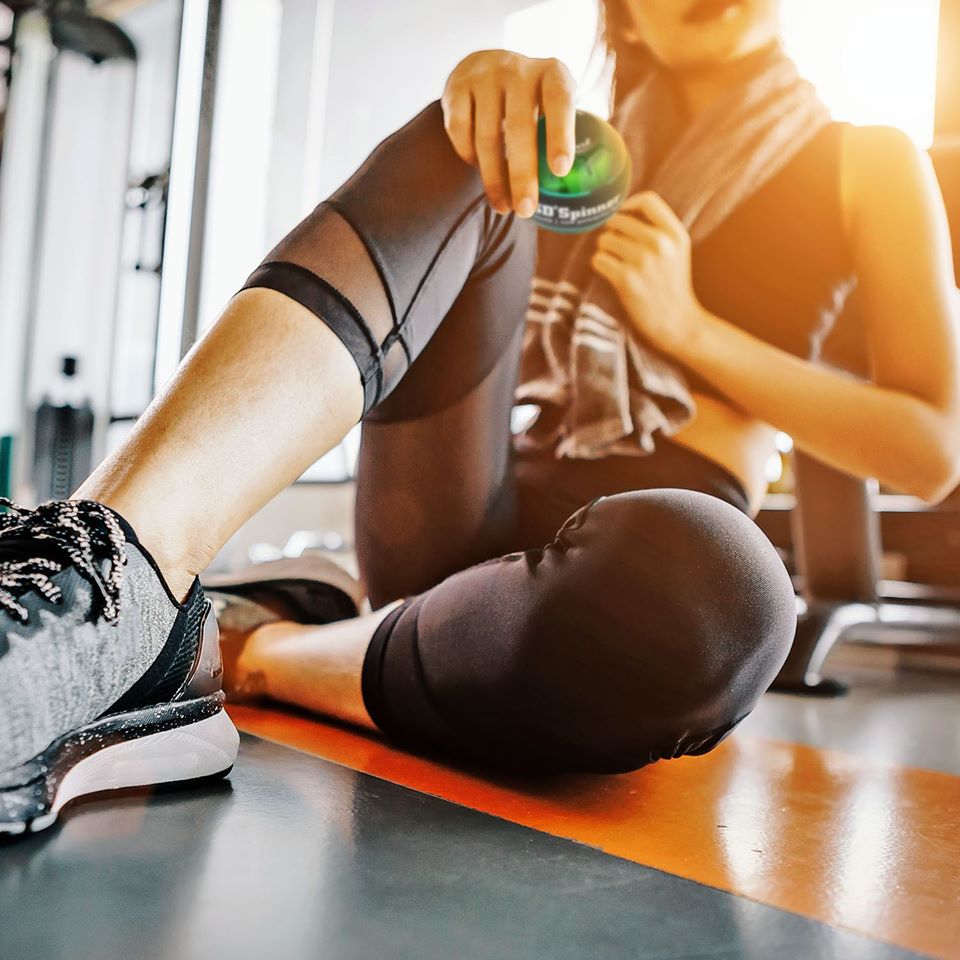
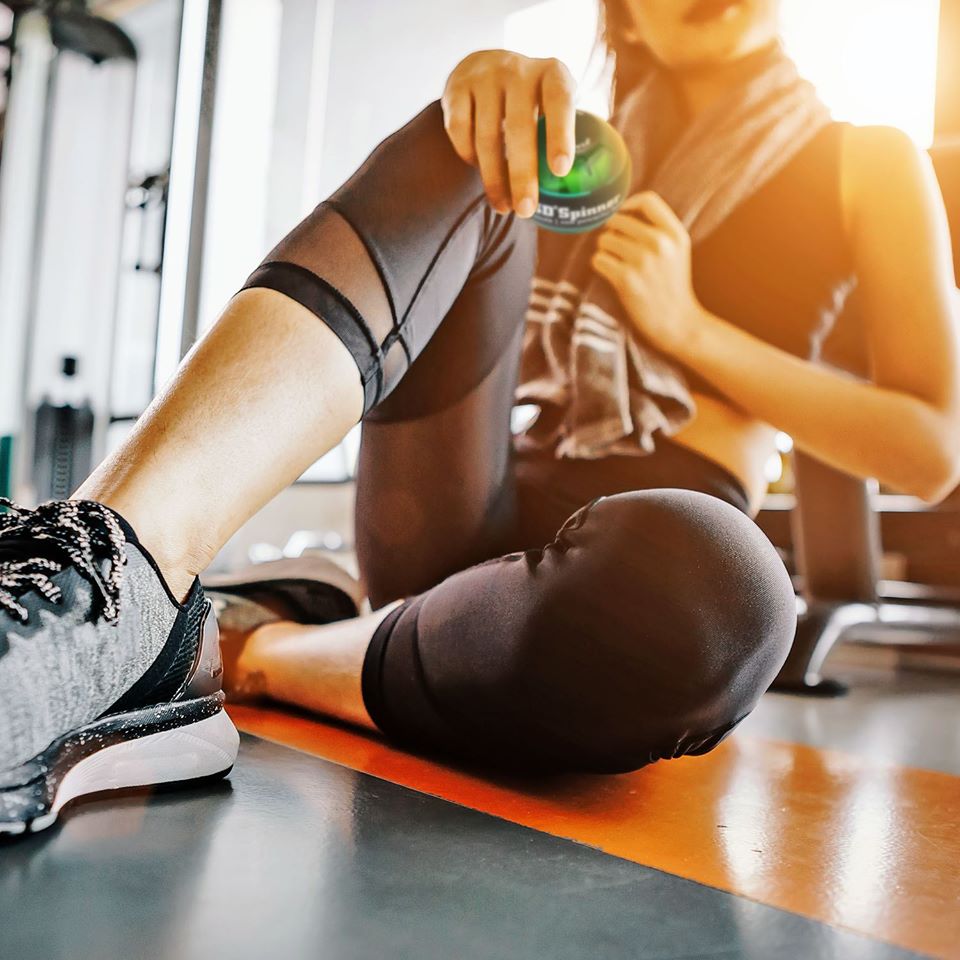
Grip strength is one of the simplest things you can measure — and one of the strongest predictors of how long, and how well, you’ll live. Training it takes minutes a day, no gym required. This guide covers the science behind grip strength training, the exercises that build it fastest, and the exact weekly dose the research points to.
Grip strength is a proxy for whole-body strength and neuromuscular health — which is why researchers treat it as a vital sign. A weak grip rarely stays a “hand problem.” It tracks with frailty, slower recovery, and higher disease risk.
The clearest recent evidence comes from the UK Biobank. In a study of 466,788 adults, people in the weakest grip-strength group had a 72% higher risk of developing dementia and an 87% higher risk of dying from dementia than those in the strongest group (Esteban-Cornejo et al., 2022).1 The authors estimated that roughly 30% of dementia cases in the cohort were attributable to low grip strength.
The takeaway isn’t that squeezing a ball prevents dementia. It’s that grip strength is a window into how well your body — and brain — are aging, and it’s one of the few markers you can actively train.

Grip strength training is any exercise that loads the muscles of the hand, wrist, and forearm to build the force and endurance of your grip. It targets two opposing muscle groups: the flexors (that close your hand) and the extensors (that open it and stabilize the wrist).
Most people only ever train the flexors — squeezing, hanging, carrying. Ignoring the extensors is exactly what leaves the forearm imbalanced and sets up overuse injuries like tennis and pickleball elbow. Good grip training works the full range in both directions.
A gyroscopic trainer like the NSD Spinner trains flexors and extensors through the wrist’s full range in a single motion — the spinning rotor creates resistance in every direction you move, not just the squeeze.
Here’s where the second study matters. Researchers followed 147,374 adults and mapped resistance-training volume against death risk. They found a clear “sweet spot” at 90–119 minutes of resistance training per week (Zhang et al., British Journal of Sports Medicine, 2026).2
At that dose, participants had:
| Weekly resistance training | Mortality benefit vs. none |
|---|---|
| 90–119 min (“sweet spot”) | 13% lower all-cause mortality |
| 90–119 min | 19% lower cardiovascular mortality |
| 90–119 min | 27% lower neurological-disease mortality |
| Above 120 min | No additional benefit (plateau) |
Two things stand out. First, more is not better past about two hours a week — the curve flattens. Second, the biggest single win was for neurological-disease mortality, which lines up neatly with the grip-and-brain findings above.
The practical version: you don’t need marathon sessions. You need consistent, short, full-range loading of your muscles — including the forearms and grip — most days of the week.
This is the case for a portable trainer. A few spins of an NSD Spinner takes about a minute, so grip work fits into the gaps in your day — at your desk, on the couch, between sets.
You can build grip with almost no equipment. Rotate through these:
| Exercise | Trains | Portable? | Quantifiable? |
|---|---|---|---|
| Dead hang | Flexors, forearm | No | Time only |
| Farmer’s carry | Flexors, whole body | No | Weight / distance |
| Wrist curls | Flexors + extensors | No | Reps / weight |
| Gyroscopic spinner | Flexors + extensors, full range | Yes | Yes — RPM |
The last row is the NSD niche: it’s the only option on the list you can carry in a pocket and get a hard number from. The rotor’s RPM is your rep counter — you can see your grip getting stronger week to week, instead of guessing.
A gyroscopic (or “gyro”) trainer holds a spinning rotor inside a shell. Once it’s spinning, keeping it going forces your wrist and forearm to resist the rotor in a continuous circle. The faster it spins, the more resistance it generates — so the tool scales with you automatically.
NSD makes a few versions for different starting points:
The brand frames it as Recover → Reinforce → Retain: ease wrist and forearm pain, build grip and forearm strength, then hold onto that performance so injuries don’t keep coming back.
Most people notice a stronger, more secure grip in 2–4 weeks of near-daily short sessions, with meaningful strength gains over 8–12 weeks. Grip responds well to frequency — small doses often beats one long weekly session.
A note for athletes: a peer-reviewed trial found that 8 weeks of gyroscopic-device training significantly improved grip strength, wrist and shoulder strength, proprioception, and upper-limb performance in participants that included a tennis-elbow group.3 Consistency, not intensity, drove the results.
Yes — arguably more than for anyone. Racquet and grip sports load the forearm hard and unevenly, which is how “pickleball elbow” and tennis elbow start. Most players respond by reducing load — softer paddles, different grips, resting. That treats the symptom.
The other path is raising capacity: making the forearm strong enough that normal play stops overloading it. Full-range grip training — flexors and extensors — is how you build that capacity so the pain stops coming back.
This is exactly what the Performance Spinner is built for: quantifiable, portable, full-range forearm work an athlete can do daily in season.
The same logic applies well beyond sport. Anyone doing repetitive, fine-motor work with their hands runs into the same flexor and extensor imbalance — see our guide to hand exercises for musicians.

Spend hours at a keyboard or controller? Repetitive strain builds there too. See Wrist Pain From Gaming: Causes, Fixes, and When to See a Doctor for what to change in your setup and when to get checked.
Does grip strength really predict dementia risk?
It’s an association, not a cure. In the UK Biobank study of about 467,000 adults, the weakest grip group had 72% higher dementia incidence and 87% higher dementia mortality than the strongest — grip strength is a marker of overall neuromuscular health, and it’s trainable.1
How much strength training gives the biggest longevity benefit?
Research points to a sweet spot of about 90–119 minutes per week, with benefits plateauing beyond about 120 minutes.2
Can I train grip strength at home without equipment?
Yes — dead hangs, towel wrings, and wrist curls need almost nothing. A handheld gyroscopic trainer adds portable, quantifiable, full-range resistance if you want to track progress.
How often should I train my grip?
Most days. Short daily sessions of a few minutes beat one long weekly grind, because grip strength responds to frequency.
Should I train the back of my forearm too?
Yes. Training only the flexors (squeezing) while ignoring the extensors is a leading cause of elbow overuse injuries. Train both directions.
Grip strength is trainable, measurable, and tied to how well you age. You don’t need hours — you need consistency, full range, and a way to see progress.
Wind it. Spin it. Do it. Pick the NSD Spinner that matches your level and start reinforcing your grip today.
Published by NSD Spinner · July 26, 2026 · Updated August 31, 2026.