Flabby Arms: Build a Stronger Arm Routine with Grip Training
October 20, 20267 min read
Searching for exercises for flabby arms often leads to a list of triceps moves. Building an arm routine gives you more to work with: upper-body strength, control of the weight, and the grip that holds it.
Try noticing the difference between a relaxed hand and a comfortable fist, with your arm resting at your side. You may feel parts of your arm become firmer during the action. That temporary sensation can make you curious about how your hand and arm work together.
For a lasting training plan, the question is how to work on strength and control alongside the appearance changes you hope to make.
Upper-arm appearance involves skin, fat, and muscle. Strength training addresses the muscle component. Grip and forearm work can complement that routine—and NSD Spinner offers a compact way to include it.
What causes flabby arms?
“Flabby arms” is an everyday description of upper-arm appearance. It can involve fullness beneath the skin, loose skin, and the contour of the underlying muscles.
The American Society of Plastic Surgeons identifies aging, weight changes, and inherited characteristics as contributors to upper-arm sagging. Understanding the different factors helps you set a goal that exercise can address.
What influences appearance?
What it means for your plan
Muscle
Resistance training can develop strength and muscle size.
Fat beneath the skin
Consider overall body composition; arm exercises do not reliably select where fat is lost.
Loose skin
Stronger muscles can coexist with excess skin; exercise does not remove that skin.
These factors can overlap. “Arm flab” and “bat wings” do not describe a single condition, and appearance alone cannot tell you how strong someone is.
How are gripping and upper-arm muscle activity connected?
Compare a relaxed hand with a comfortable fist while keeping your arm in the same position. You may notice a firmer feeling around your upper arm, whether your arm is by your side or comfortably raised. This simple observation invites you to think about gripping as part of a whole-arm action.
Research adds useful context. In a 2015 electromyography study, 18 young men performed a sustained forceful grip with the elbow fully extended and the arm raised sideways to shoulder height. Researchers recorded activity and fatigue in all three heads of the triceps—the muscle at the back of the upper arm.
The finding shows that the triceps were working during this combined gripping and arm-position task. It offers a reason to look beyond the hand when discussing grip-related movement. The experiment did not compare gripping with relaxing in that same position or measure skin firmness, so it provides context for the observation rather than proof of skin tightening.
Bring that awareness into your workout: does your routine give attention to both the muscles moving the weight and the hand holding it? If your hold gives out early, review your load, technique, and equipment fit, then consider whether dedicated grip work would be useful.
Three reasons to add NSD Spinner to your routine
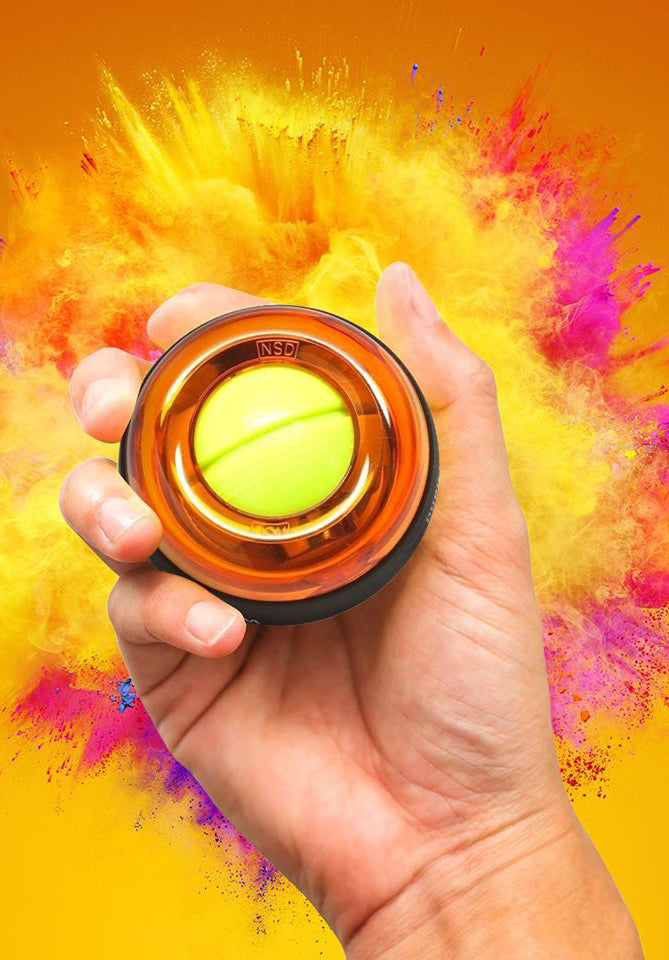
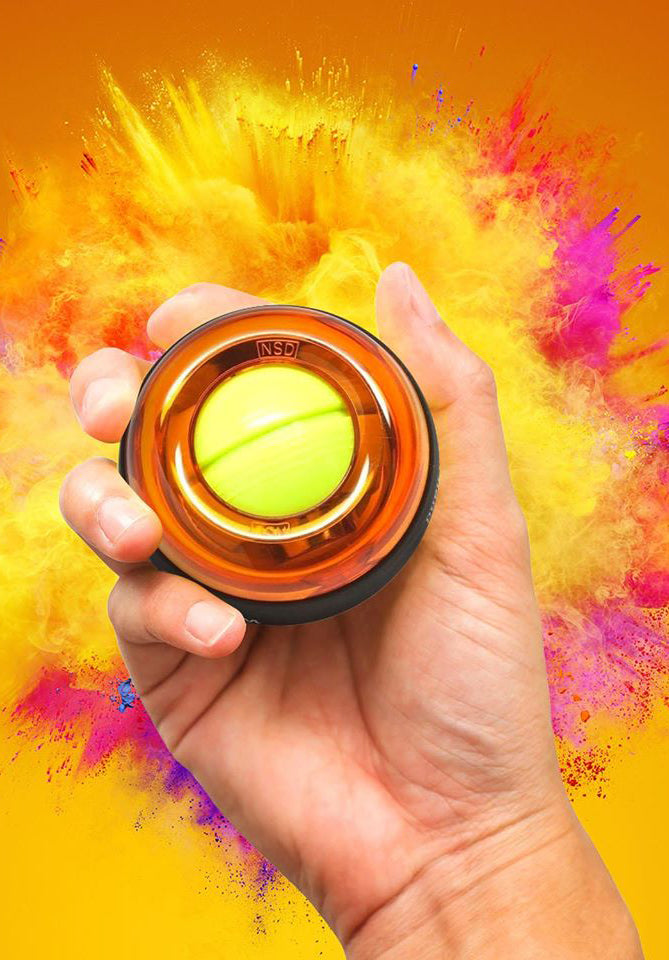
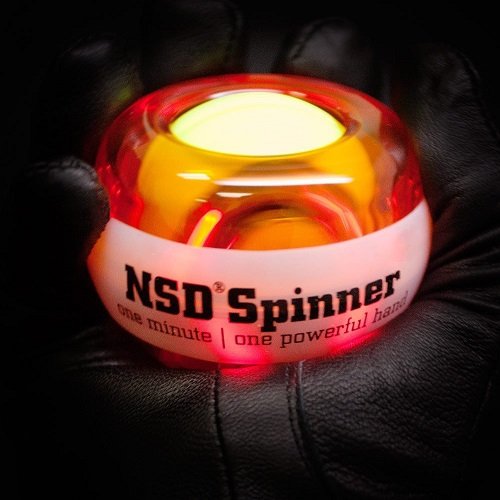
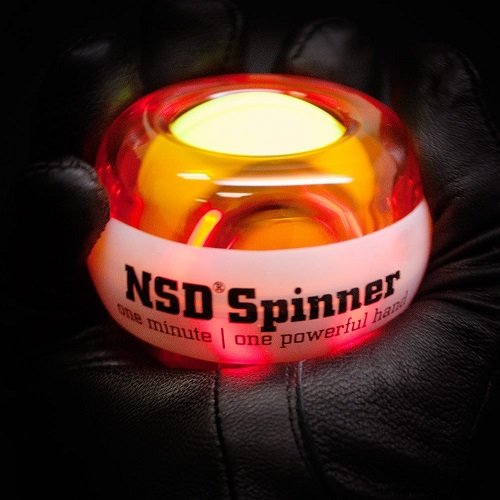
NSD Spinner is a gyroscopic wrist exerciser, often called a gyro ball, that gives hand, wrist, and forearm work a practical place alongside your main arm exercises. The NSD Thumb-Wind Start Spinner offers three useful features:
A rotational challenge you control. Keep the rotor moving with an active grip and smooth wrist movement. Resistance rises with rotor speed, so you can focus on control before increasing the challenge.
Easy to keep within reach. The 9.2-ounce, battery-free design fits in a gym bag. Its spring-loaded thumb-wind start needs no pull cord or charging.
Optional speed feedback. Choose a counter-equipped version if you want device-speed feedback during your sessions. Use comparable conditions when tracking your operation of the spinner.
Keep it with your resistance bands or other workout gear. Give it a dedicated place in your routine for hand and forearm work, while keeping your main upper-body exercises. Start by learning smooth operation and follow NSD’s instructions.
A balanced resistance program develops the upper body while giving your hands a role in handling equipment. Choose movements and resistance that suit your current ability, then progress with good control.
For readers thinking about flabby arms over 50, exercise remains a worthwhile part of the conversation. A review of exercise in postmenopausal women found improvements in body composition, with resistance and combined training supporting muscle outcomes. The findings offer a reason to keep muscle development in your plan as you age.
Organize your routine around three practical priorities:
Train the upper body: Select appropriate pushing, pulling, and arm movements with a qualified trainer if you need help.
Pay attention to your hold: Notice whether equipment is comfortable to grip and whether load or technique needs adjusting.
Add focused grip work when useful: Give the hand, wrist, and forearm their own training role alongside your main exercises.
Grip strength is a relevant outcome in the available research. In a 2020 study, 40 adults with nonspecific wrist pain used a Powerball gyroscope over four weeks, and their measured grip strength improved.
The study had no separate control group, tested a particular population, and did not establish results for every NSD model. It supports further interest in this kind of grip training rather than a guarantee of individual results.
The supported product role is focused hand, wrist, and forearm training. The study did not test upper-arm fat loss or skin tightening. A review of localized exercise also found no localized fat-loss effect. Keep that distinction in mind when setting appearance goals.
Building a balanced flabby arms workout
Here is a beginner-friendly upper-body session you can build into a full-body program. Schedule it twice a week on nonconsecutive days, such as Monday and Thursday. You will need a wall, light dumbbells, a stable support for one hand, and your NSD Spinner.
Warm up: Walk or march for five minutes, then rehearse each strength movement without weight. Start with one set of each exercise below. Rest approximately 60–90 seconds between sets or movements, and longer if you need it to regain comfortable breathing and control.
Exercise
Starting amount
How to perform it
Role in the session
Wall push-up
1 set of 8–12 repetitions
Place hands at shoulder height, slightly wider than your shoulders. Keep your body straight, bend your elbows to approach the wall, then press away. Keep elbows angled back rather than flared sideways.
A pushing movement involving the chest and triceps.
Supported one-arm dumbbell row
1 set of 8–12 per side
Support one hand on a stable surface, hinge at the hips, and keep your back steady. Draw the weight toward your hip, then lower with control. Avoid twisting your torso.
A pulling movement involving the back, elbow flexors, and grip.
Light dumbbell triceps kickback
1 set of 8–12 per side
Use a supported hip-hinge position. Keep the upper arm beside your torso, straighten the elbow without snapping it, then bend it slowly. Use a light weight so the upper arm stays still.
Direct work for the back of the upper arm.
NSD Spinner control practice
Start with one short, comfortable bout per hand; stop before control deteriorates
Follow the starting instructions for your model. Keep your shoulder relaxed and elbow comfortably bent near your side. Establish smooth wrist movement before increasing rotor speed.
Dedicated rotational resistance for grip, wrist, and forearm work.
The exercise selection and starting amounts above are an illustrative routine, not a clinically tested NSD protocol. General strength-training guidance supports starting with manageable resistance, controlled technique, and recovery between sessions. Mayo Clinic's strength-training guidance explains these principles.
Choose your effort: Finish the weighted sets feeling that you could do about two more controlled repetitions. If you need to swing, shrug, hold your breath, or change posture to finish, reduce the load or repetitions. For wall push-ups, standing closer to the wall makes the movement easier. Stop an exercise if it causes sharp pain, tingling, or joint pain.
Progress one thing at a time: Build from eight toward twelve good repetitions. Once twelve feels manageable across two sessions, add a second set or slightly increase resistance, then return to the lower end of the repetition range. For NSD, establish comfortable, repeatable control first; gradually extend a bout or increase speed, rather than changing both together. If you are still learning to start the rotor, make that your practice goal.
Why put NSD last? This arrangement lets you complete the dumbbell exercises before adding focused grip fatigue. It also gives the spinner a clear job in the workout: a compact finishing exercise for the hand, wrist, and forearm. Record your repetitions, load, and spinner control after each session. Optional RPM feedback measures device speed, so compare it under similar conditions.
Keep lower-body and other major-muscle-group training elsewhere in your weekly plan. If you have an existing arm or shoulder injury, have a qualified clinician or trainer adapt the session.
Put grip training within reach. Explore the NSD Thumb-Wind Start Spinner—choose the standard version or add a counter for speed feedback during your hand, wrist, and forearm practice.
Frequently asked questions
Can flabby arms be toned?
Resistance training can develop muscle and strength. A more defined appearance also depends on fat and skin, so results differ between people.
What is the best exercise for flabby arms?
There is no single best movement for everyone. A useful starting point is a balanced selection of pushing, pulling, and arm exercises suited to your ability. Keep direct upper-arm work in the plan, and use NSD Spinner to add focused grip, wrist, and forearm training.
Are exercises for bat wings different from other arm exercises?
“Exercises for batwing arms” and “exercises for flabby underarms” often describe the same goal: improving the appearance of the back of the upper arm. Choose exercises based on the muscles and movements you want to train, rather than the nickname. The muscle, fat, and skin distinctions above still apply.
Is NSD Spinner only a squeezing exercise?
No. You hold the shell while using wrist movement to sustain a spinning rotor. The challenge combines maintaining your grip with controlling rotational resistance.
Yes, it can serve as an accessory for hand, wrist, and forearm work alongside an appropriate upper-body routine. Choose a manageable workload and prioritize smooth control.
Subscribe
Sign up to get the latest on sales, new releases and more …