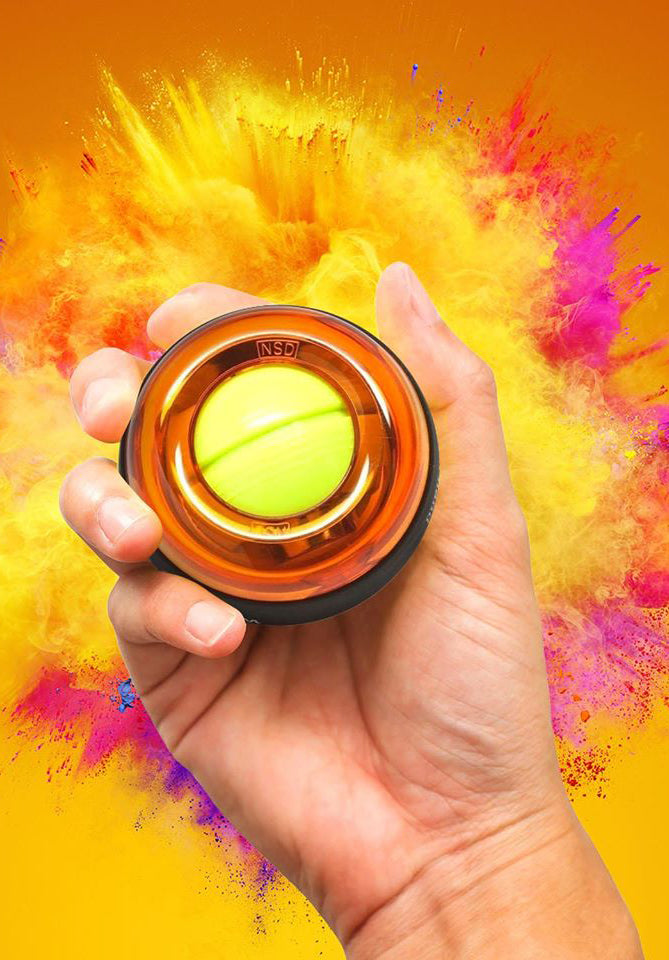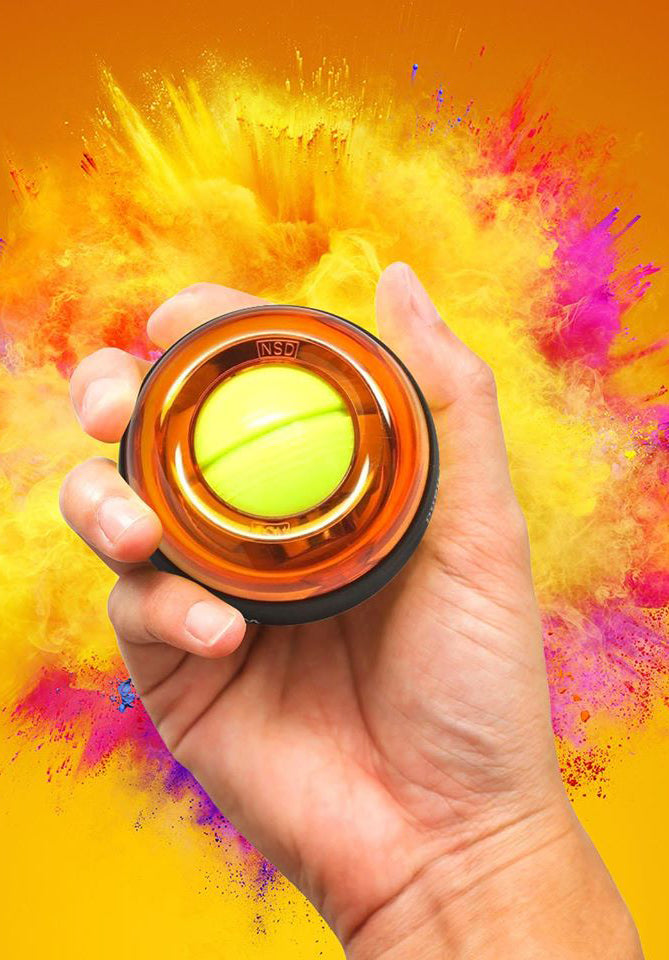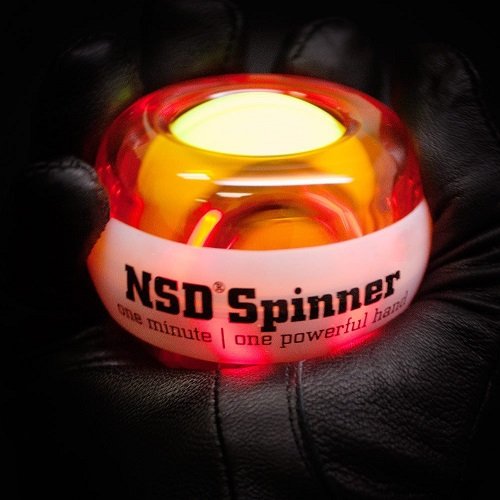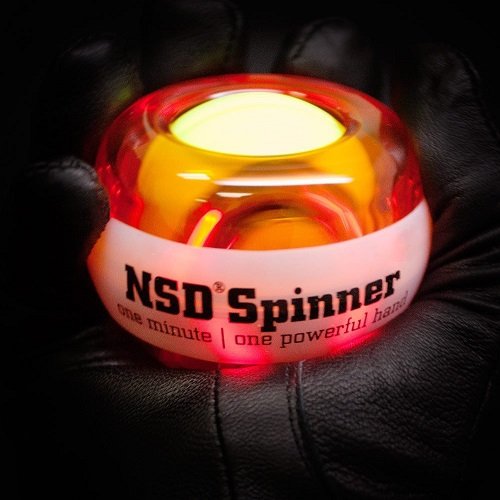
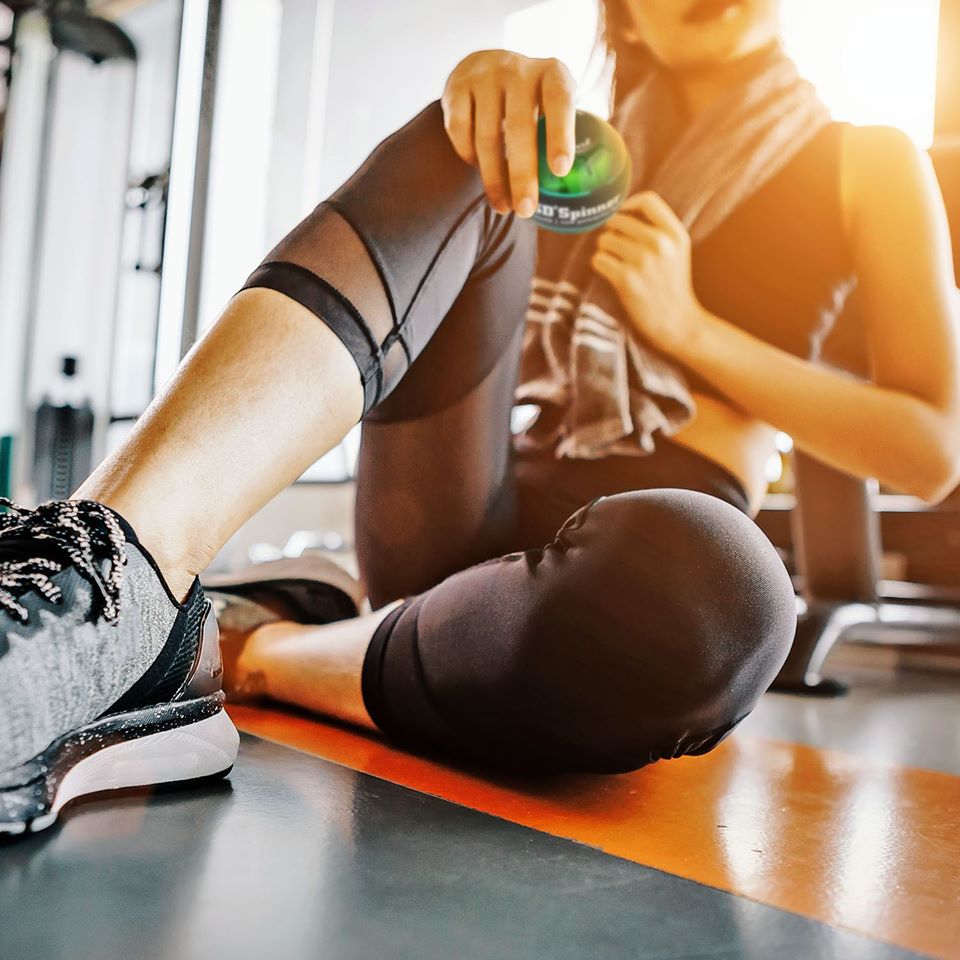
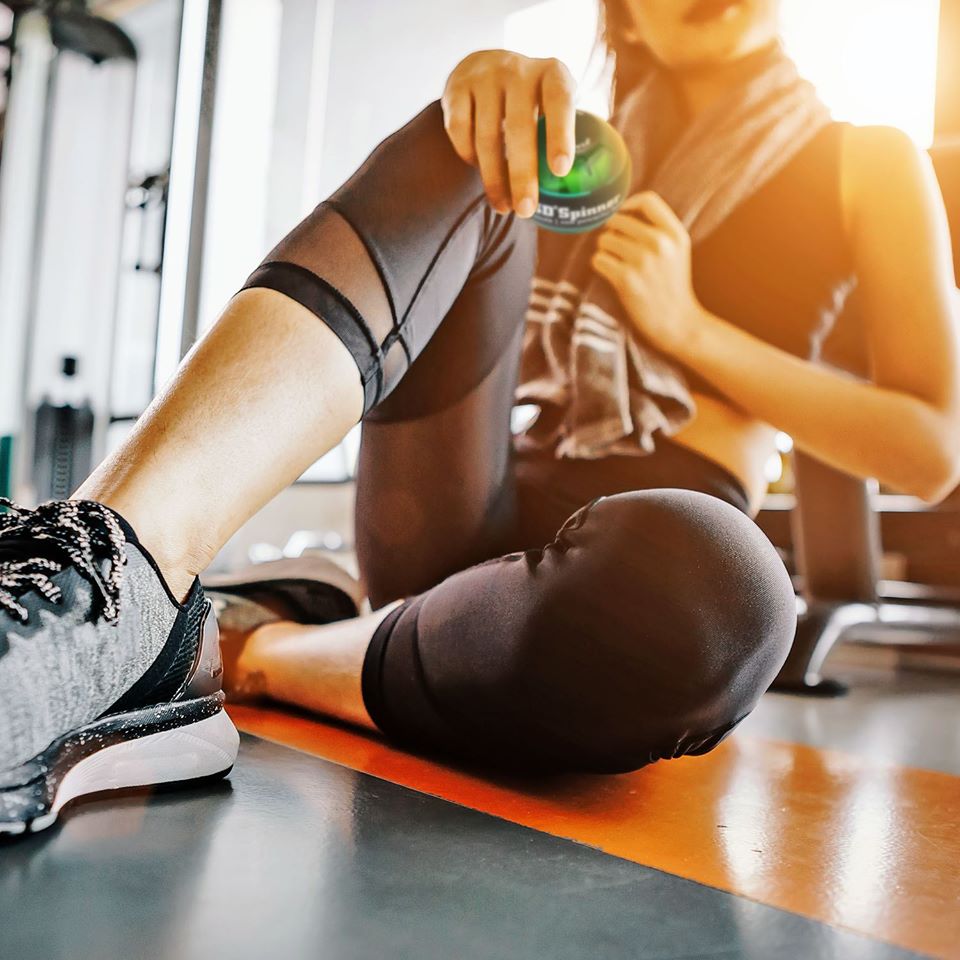
NSD Spinners are scientifically developed to help your arms get the right support they need. Get the right compliment to your arm exercises now.

Forearm training for climbing is not simply about squeezing harder. Climbers need enough finger strength to hold small edges, enough forearm endurance to repeat contractions, and enough technical efficiency to avoid wasting that strength.
If your forearms become hard and swollen after only a few routes, adding more grip training may not be the first answer. Early pump can also come from over-gripping, bent-arm climbing, insufficient warm-up, short rest periods, or relying too heavily on the upper body.
An effective climbing forearm workout should address four areas:
This guide explains how these elements fit together—and where hangboards, wrist exercises and gyroscopic resistance can support your climbing.
Forearm pump is the temporary loss of grip capacity that occurs when repeated muscular contractions limit local blood flow and metabolites accumulate in the working muscles.
Climbing requires frequent isometric contractions: your fingers and forearms produce force while holding relatively still. When those contractions are intense or repeated without enough recovery, your forearms may feel:
A study of intermediate climbers found that 30 minutes of continuous climbing reduced dominant-hand grip strength by 22% and non-dominant grip strength by 23%. Forearm circumference increased by approximately 4.4%–4.5%, illustrating the relationship between forearm swelling and declining grip performance. Read the study on PubMed.
Pump is a normal part of climbing. The goal is not to eliminate it completely, but to delay it, manage it and recover more effectively.
The most common reason is not necessarily weak forearms. It is inefficient force use.
New climbers often squeeze every hold harder than necessary because they have not yet learned how much pressure each hold requires. This turns relatively easy moves into repeated high-intensity contractions.
Other common causes include:
In climbing-community discussions, experienced climbers repeatedly recommend straight arms, better footwork, gradual warm-ups and using the minimum grip pressure necessary to stay on the hold. These observations are anecdotal, but they reveal an important pattern: better technique can reduce the amount of forearm capacity each move consumes.
Before adding more training volume, ask whether you are using the strength you already have efficiently.
Grip strength is the amount of force you can produce. Forearm endurance is your ability to sustain or repeat force before performance declines.
A climber may have enough strength for one difficult move but lack the endurance to repeat similar moves across a route. Another climber may have good endurance on large holds but insufficient finger strength for a small edge.
| Limitation | Typical sign | Training priority |
|---|---|---|
| Maximum finger strength | You cannot hold the required edge | Progressive climbing or hangboard strength work |
| Grip endurance | You can do individual moves but fade during longer sequences | Intermittent hangs, route intervals and endurance climbing |
| Technique | You become exhausted on relatively easy holds | Footwork, straight arms and reduced grip pressure |
| Recovery capacity | Performance falls across repeated attempts | Longer rests and better training-load management |
| Wrist stability | Slopers or wrist-dependent positions feel uncontrolled | Supplemental wrist and forearm conditioning |
Hangboards can improve finger strength and finger-flexor endurance when the program matches the climber's experience and recovery capacity.
In one controlled study of advanced climbers, eight weeks of intermittent dead-hang training improved grip endurance by approximately 45%. The protocol was structured and progressive; it was not simply hanging until failure. View the study on PubMed.
Another randomized study found that weighted hangboard training can improve climbing-specific grip strength. View the study on PubMed.
That does not mean every beginner needs a hangboard. New climbers often progress through regular climbing while their fingers, connective tissues and movement skills adapt. A hangboard is also a finger-specific, mostly isometric tool. It does not train the wrist through the same dynamic, multidirectional challenge as a gyroscopic trainer.
Use easy climbing to learn the minimum pressure required to stay on each hold. Keep the arms long when possible, let the legs carry more of your body weight and notice when unnecessary tension appears.

Longer periods of easy climbing can build sport-specific endurance without the intensity of repeated maximal attempts. Choose terrain where you can maintain movement quality and finish with some reserve.
More experienced climbers can use controlled hangs for finger strength or endurance. Progress gradually, keep the shoulders engaged and stop if you experience sharp or localized pain.
Climbing positions can challenge the wrist and forearm in more than simple flexion. Supplemental work may include:
The aim is not to exhaust every muscle. It is to build useful capacity without reducing the quality of your next climbing session.
Antagonist training works muscles and movement patterns that receive less emphasis during climbing. Climbers perform a large amount of finger flexion, pulling and shoulder internal rotation, so supplemental programs often include finger extension, pressing, wrist extension and external-rotation work.
Antagonist exercises are not a universal cure for pain or injury. Their value is broader: they can help build a more complete training base and distribute exercise stress across more movement patterns. Persistent pain still requires appropriate medical assessment.
A gyro wrist exerciser contains a rotor that produces resistance as it spins. The user must continuously guide the device against changing rotational force, so the resistance increases with speed and depends on maintaining coordinated motion.
This can challenge:
Gyroscopic resistance is not a replacement for climbing because it does not reproduce climbing holds, body positions, footwork or route-reading. It is also not a replacement for the finger-specific loading of a hangboard. Its best role is supplemental off-wall wrist and forearm conditioning.
The NSD Dynamics Titan PB-888E is a self-starting gyroscopic wrist and forearm exerciser. Its built-in motor starts the rotor at up to 2,000 RPM, allowing the user to begin without a starter cord. As rotational speed increases, resistance increases.

Product features include:
The counter is especially useful for structured training because it makes the workload measurable. Instead of judging a session only by how much the forearms burn, climbers can record speed, duration and control.
Start with short, submaximal bouts. Keep the wrist movement smooth, maintain control of the device and stop before technique breaks down. Increase only one training variable at a time—such as duration or RPM—while monitoring how the additional workload affects subsequent climbing sessions.
The PB-888E should not be used to push through wrist, finger or elbow pain.
| Method | Primary use | Resistance style | Best fit |
|---|---|---|---|
| Actual climbing | Technique and sport-specific capacity | Full-body and variable | Highest priority |
| Hangboard | Finger strength and isometric endurance | Static grip positions | Experienced climbers |
| Hand gripper | General closing-grip strength | Repeated finger flexion | Basic grip conditioning |
| Extensor bands | Finger and wrist extension | Repeated extension | Supplemental balance |
| Gyro wrist exerciser | Wrist and forearm conditioning | Dynamic multidirectional resistance | Supplemental conditioning |
There is no universal schedule. Appropriate frequency depends on climbing experience, weekly climbing volume, intensity, finger-training history, recovery, other strength training and any previous hand, wrist or elbow problems.
Supplemental forearm work must fit around climbing rather than compete with it. If grip quality is consistently worse during climbing, your off-wall workload may be too high or scheduled too close to an important session.
Begin conservatively, progress one variable at a time and treat performance in climbing—not fatigue during an accessory exercise—as the most important feedback.
Normal pump is usually diffuse, temporary and improves with rest. Stop training and seek appropriate medical advice if you experience:
A climbing grip trainer is a conditioning tool, not a diagnostic or medical device. Do not use it to train through unexplained pain.
The best approach depends on the limitation. Climbing itself develops technique and sport-specific endurance. Hangboards can train finger strength and isometric endurance. Supplemental wrist work—including controlled gyroscopic resistance—can build broader wrist and forearm capacity.
Improve footwork, use straighter arms, reduce unnecessary grip pressure, warm up gradually and rest adequately between hard attempts. More grip exercise will not compensate for inefficient climbing.
Grip and finger strength can improve the ability to hold demanding grips, but climbing performance also depends on endurance, technique, movement efficiency, route reading and recovery.
A gyro ball can support off-wall wrist and forearm conditioning. It does not replace climbing practice or finger-specific training, but it can add progressive, multidirectional resistance to a broader program.
They train different qualities. A hangboard is more specific to finger strength and isometric grip. A gyro wrist exerciser provides dynamic resistance for the wrist and forearm. Choose the tool that matches the capacity you need to develop.
Beginners can use supplemental grip or wrist tools conservatively, but regular climbing, movement skill and recovery should remain the priority. Start with short, submaximal sessions and avoid training through pain.
No exercise can guarantee injury prevention. Progressive training may improve physical capacity, but injury risk also depends on technique, workload, recovery and individual health. Persistent symptoms require professional assessment.
Forearm training for climbing works best when it solves a specific limitation.
If you cannot hold a demanding edge, develop finger strength. If you can perform individual moves but fade across a route, build endurance. If easy climbing produces an immediate pump, improve technique and force efficiency. If the wrist and forearm need broader off-wall conditioning, use supplemental tools without replacing sport-specific work.
Climbing remains the most specific form of training. Hangboards can develop targeted finger strength and endurance. Dynamic tools such as the NSD Dynamics Titan PB-888E can complement that work by providing measurable, progressive resistance for the wrist and forearm.
For a broader approach to progressive grip work, see our grip strength training guide.
Build strength, but also learn when not to use all of it.
Recover. Reinforce. Retain.
Explore the NSD Dynamics Titan PB-888E →